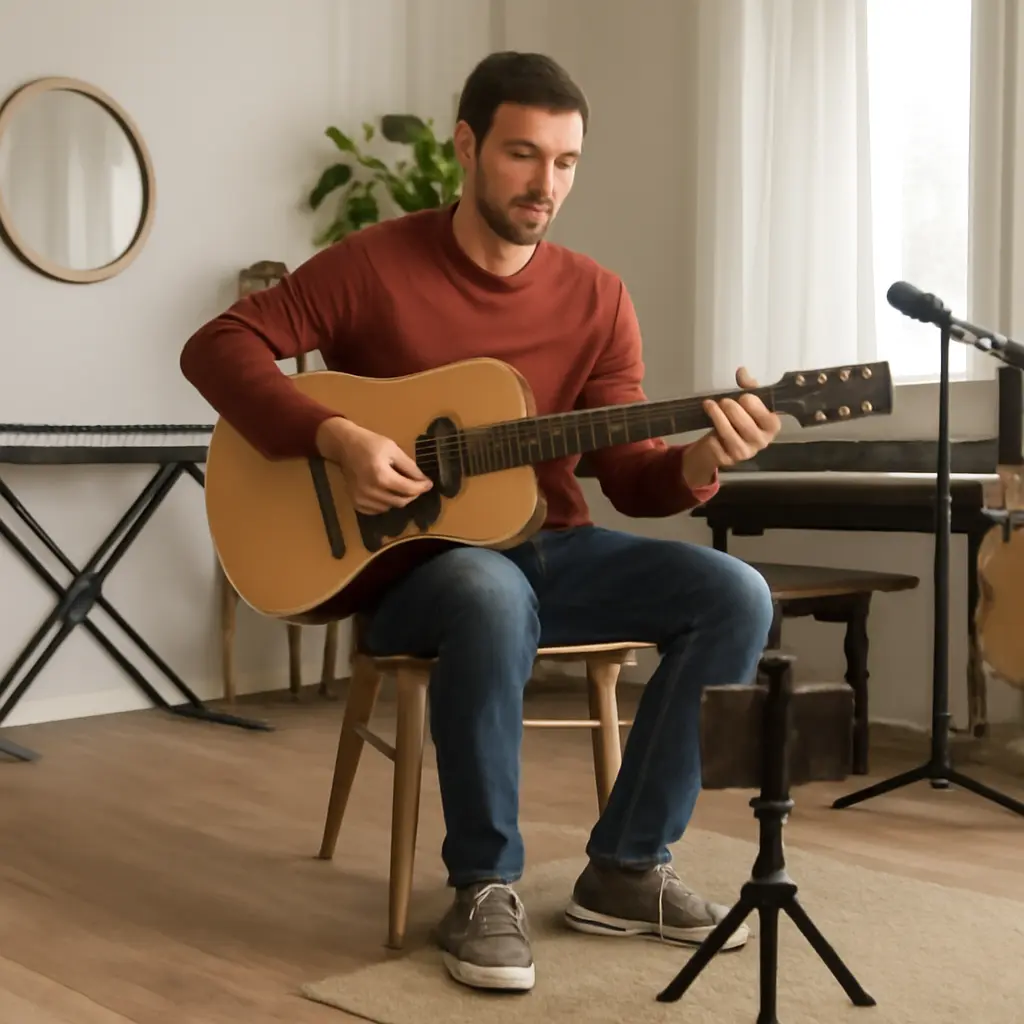
Short video clips are brief, shareable videos—often built around a song excerpt, performance, or visual persona—that can introduce an artist to audiences before they hear a full album. They are increasingly influential in shaping first impressions: TikTok reported in 2024 that 84% of songs entering the Billboard Global 200 had gone viral on TikTok first, while Luminate reported that U.S. on-demand audio streams reached 1.4 trillion in 2023. Clips do not make album art obsolete; rather, they give listeners a moving, repeatable identity signal that can travel rapidly through feeds. The change matters because discovery, recognition, and fan participation now often begin in short-form video, while album covers remain important for packaging and sustained visual storytelling.
Short-Form Video as an Artist Identity Signal
Artist identity is the recognizable combination of an artist’s sound, image, values, performance style, and public narrative. There is no single scholarly definition that makes short videos a complete identity by themselves. Instead, they function as repeated identity cues: viewers encounter a face, gesture, lyric, color palette, setting, or personality in a compact format, then connect those cues to a song and artist name. Media scholar Henry Jenkins’s account of participatory culture helps explain why this process can be powerful: audiences do not only receive media but also circulate, reinterpret, and create around it.
The key distinction is speed and repetition, not a simple contest between video and cover art. A cover is a stable image encountered in contexts such as streaming libraries, merchandise, and physical packaging. A short clip is a time-based encounter that can pair sound with motion, expression, captions, and audience response. TikTok’s 2024 music impact report said 84% of songs that entered the Billboard Global 200 in 2024 had first gone viral on TikTok. That is a platform-reported association, not proof that viral clips alone caused chart success, but it illustrates how closely short-form discovery is connected to mainstream music circulation.
Performance identity
Performance identity is the impression created through an artist’s voice, movement, expression, and on-camera presence. A few seconds of a live vocal, dance, or studio performance can communicate qualities that a still cover cannot show directly. The format also makes performance repeatable: fans can reuse a sound, imitate choreography, or respond with their own videos. This can make an artist’s gestures and stage manner recognizable, although a trend may sometimes become more memorable than the artist behind it.
Visual and narrative identity
Visual and narrative identity consists of the recurring imagery, settings, styling, and stories audiences associate with an artist. Short clips can serialize this identity through previews, behind-the-scenes moments, tour footage, humor, or explanations of a song’s meaning. Unlike a single album cover, a sequence of posts can reveal change over time. The trade-off is that rapid posting may create fragmented impressions unless the artist’s visual language and story remain coherent across clips and longer releases.
Short-Form Video as a Music-Discovery Channel
Music discovery is the process through which listeners encounter unfamiliar artists or tracks and decide whether to listen further. Short-form feeds combine recommendation systems, searchable sounds, creator participation, and social sharing. This makes clips a discovery mechanism as well as a branding format: a listener may first hear a song through a dance, joke, edit, or personal story rather than through an album page. The transition from exposure to lasting fandom, however, depends on whether the audience can find the full track, understand the artist’s broader work, and choose to return.
Sound-led discovery and platform circulation
Sound-led discovery occurs when a reusable song excerpt travels among videos, linking a track to many different creators and contexts. TikTok’s 2024 report described the platform’s role in music discovery and chart visibility; its findings should be read as platform-specific rather than as a complete measure of how all listeners discover music. Luminate’s 2023 year-end report estimated 1.4 trillion U.S. on-demand audio streams, showing the scale of the broader listening environment into which viral attention can convert. A clip can prompt a stream, but streaming totals alone do not establish that a viewer developed a durable connection to the artist.
Creator participation and fan interpretation
Creator participation means that listeners use, remix, or respond to music rather than simply watching an official promotion. A song excerpt may become a dance, a meme, a reaction format, or a soundtrack for personal storytelling. This participatory layer gives an artist’s identity multiple points of entry, but it also means that audiences can attach meanings the artist did not intend. Artists and labels therefore need to consider both the official clip and the wider fan-made context in which a song circulates.
Album Art and Short Video as Complementary Identity Formats
Album art is the visual packaging associated with a release, while short-form video is a changing sequence of audiovisual encounters. Each has different strengths. A cover provides a consistent visual anchor that can be recognized in a library or collection; video can show movement, voice, personality, and interaction. The strongest artist identities often connect the two, using a coherent palette, typography, styling, or imagery across cover art, music videos, social clips, and live presentation.
The cover as a durable visual anchor
A cover is a fixed image that helps distinguish a release and can condense its mood or concept into a recognizable design. Its durability is useful: it remains attached to the album across listening sessions and formats, while a fast-moving feed may bury an individual post. Covers also have a long history as collectible and promotional objects. Their limitation is that they cannot, on their own, demonstrate an artist’s voice, movement, or day-to-day personality.
The clip as a repeatable, evolving encounter
A short clip is a compact video that can be replayed, shared, and adapted by other users. Its identity-building value comes from combining sound and image with a platform’s recommendation and participation features. Its weakness is volatility: trends change, distribution is shaped by platform systems, and a popular excerpt may not represent the full range of an artist’s work. For that reason, clips are best treated as an introduction to an identity, not a substitute for a considered visual and musical catalog.
Artist Cases and Practical Implications
Real-world cases show that viral video attention can support different kinds of artist identity, but no single pathway guarantees long-term success. Lil Nas X’s “Old Town Road” became closely associated with TikTok’s “Yeehaw Challenge” before its record-setting run on the Billboard Hot 100, illustrating how a participatory format can carry a song into broader culture. In another model, artists use regular clips to show songwriting, humor, live ability, or personal perspective, building a more rounded public presence than a single trend can provide. These examples demonstrate mechanisms, not a universal formula: platform exposure, song appeal, distribution, timing, and sustained audience engagement all matter.
For artists, managers, and labels, the practical goal is to make short video recognizable without reducing the artist to one moment. Clips can introduce a hook or visual motif, while album artwork and longer videos provide continuity and depth. Useful evaluation measures include saves and shares, completion and replay rates, profile visits, full-track listening, repeat engagement, and audience growth across platforms. A view count by itself is a weak proxy for a lasting fan relationship.
Conclusion: A Faster First Impression, Not a Replacement
Short-form video can define an artist’s first impression faster than album art because it combines music, motion, personality, and audience participation in a format built for circulation. Platform and industry data, including TikTok’s report that 84% of 2024 Billboard Global 200 entries first went viral on TikTok and Luminate’s estimate of 1.4 trillion U.S. on-demand streams in 2023, indicate the scale of the discovery environment, while not proving that virality alone creates lasting careers. Performance identity, visual storytelling, creator participation, and the durable role of album covers all remain part of the picture. Artists should build a consistent identity across clips and releases, and listeners can look beyond the viral excerpt to explore the full work.
Sources: TikTok, Music Impact Report 2024, https://newsroom.tiktok.com/en-us/tiktok-music-impact-report-2024; Luminate, 2023 Year-End Music Report, https://luminatedata.com/reports/2023-year-end-music-report/; Henry Jenkins, Confronting the Challenges of Participatory Culture: Media Education for the 21st Century, https://www.macfound.org/media/article_pdfs/jenkins_white_paper.pdf; Billboard, Lil Nas X’s “Old Town Road” and the TikTok “Yeehaw Challenge” coverage, https://www.billboard.com/.